You just saw it - a nice keyword that was ranking 8 yesterday is at 14 this morning. Page 2 means ~80% click loss. Your first instinct is to fix it immediately, but most rushed interventions make things worse. Here's the 48-hour playbook to distinguish three scenarios: noise, competitor overtake, or technical issue.
Hour 0–6: Confirm it isn't crawl noise
Before raising the alarm, check the data:
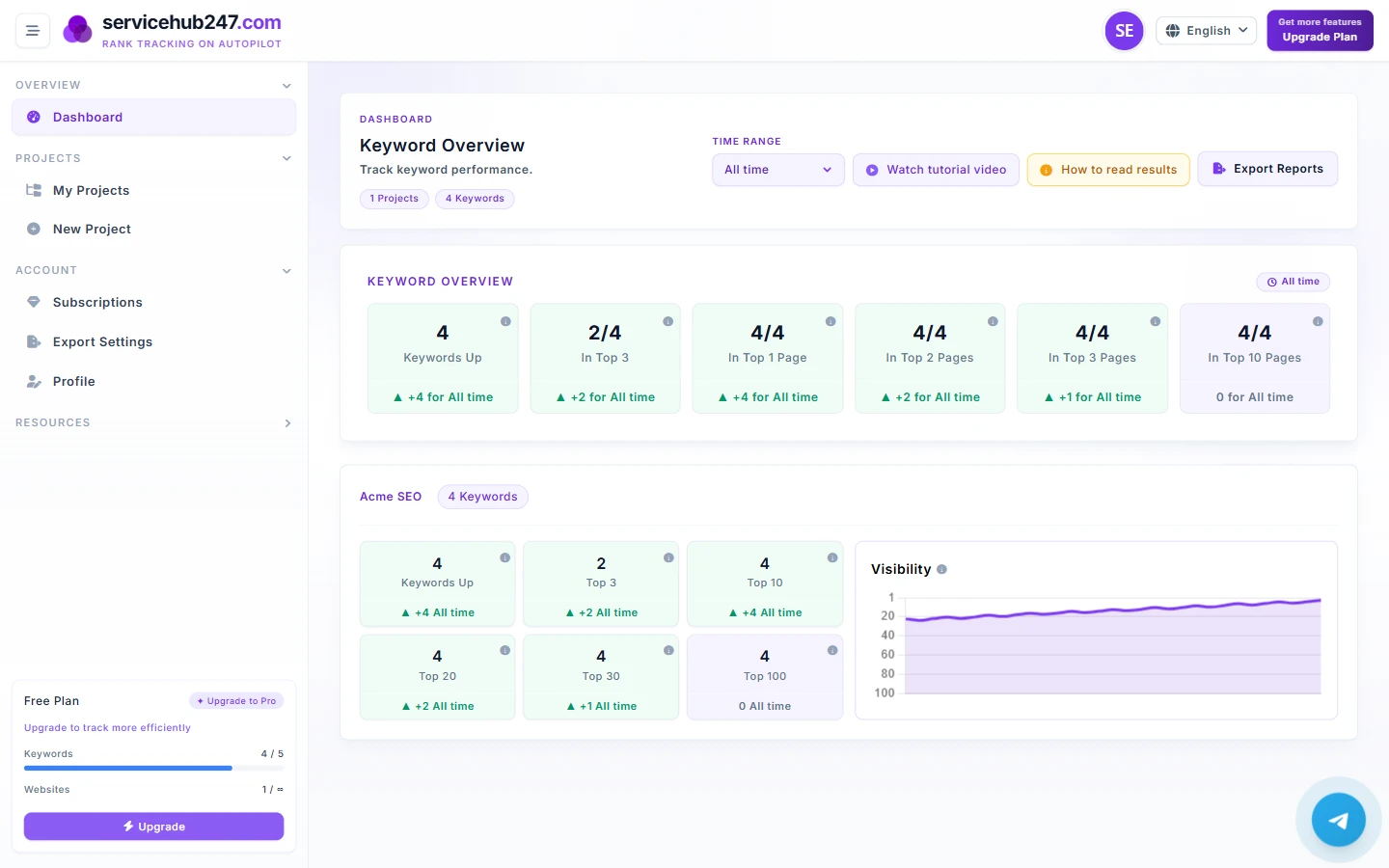
- Open the keyword detail. Look at the ranking chart - has it zigzagged naturally 8–14 across the last month? If yes, this is just another zigzag.
- Switch timeframe to This week. If position at start of week was 9 and current is 12, that's a 3-rank move - within Google's daily noise band. Note and move on.
- If last week's position was 7 and start-of-week jumped to 22 - an abrupt step - this is not noise. Move to Hour 6–24.
Quick rule: movement <5 positions inside the same page is noise; movement that crosses pages or >10 positions is a real signal.
Hour 6–24: Check technical - the cheapest cause to fix
Before thinking "the competitor got better", rule out technical causes. They make up most sudden drops because they're both easy to fix and easy for internal teams to cause:
Check indexability
- Open the ranking URL (shown in keyword detail) in an incognito tab. Does it return 200 OK?
- Check robots.txt isn't accidentally blocking it.
- Check meta robots doesn't have noindex.
- Check the canonical doesn't point elsewhere.
Check recent deploys
Ask your dev team: any major deploys in the last 3 days? URL structure changes without 301s? Template changes affecting the DOM significantly? Removed any "harmless-looking" content? This is the source of most "mysterious" ranking drops.
Check Core Web Vitals
Run PageSpeed Insights on the URL. If LCP jumped from 2.1s to 4.5s after a recent deploy, Google starts re-evaluating - that's likely your cause.
If you find a technical issue, fix it immediately and wait 7–14 days for Google to recrawl and re-evaluate. The Daily Ranking digest will be your recovery signal.
Hour 24–48: SERP analysis - what did the competitor just do?
If technical is clean, switch to SERP analysis to understand who pushed you down:
- Search Google for the keyword (incognito + correct region). Look at the 3 positions above you.
- For each competitor: is the URL newly published? (Check the date on the page, or copy the URL into Wayback Machine.) If <14 days old → this might just be "honeymoon ranking" - Google's temporary boost for new content, which typically fades in 2–4 weeks.
- If the competitor is an old page that suddenly climbed: they likely just updated heavily - could be content refresh, new internal linking, or a quality backlink. Open it and compare to the version you remember.
- If the new top-ranker is a domain you weren't watching (Wikipedia, Quora, Reddit suddenly appearing): this often signals Google re-evaluating the query's intent - shifting from "commercial" to "informational". That's a strategic issue, not a quick on-page fix.
Classification after 48h
After the above, every ranking drop falls into one of 4 categories:
| Category | Action |
|---|---|
| Noise (<5 positions, same bracket) | Do nothing. Wait 7 days. |
| Technical (indexability/CWV/deploy) | Fix now. Monitor daily report for 7–14 days. |
| New competitor content (<14 days) | Wait 2–4 weeks. They might fade naturally. |
| Structural competitor (old page rising / Google shifted intent) | Real investment needed: content refresh, links, or change target page. |
Common 48-hour mistakes
- Fixing on-page immediately before confirming the cause. Multiple simultaneous changes make Google re-evaluate from scratch, turning noise into reality.
- Rush-buying links to "push back up". New links take 4–8 weeks to take effect - they can't rescue an ongoing drop, and create suspicious link-velocity signals.
- Changing the target URL. Rarely correct. The current URL is usually still the right one; the issue is quality or competition.
- Panicking over one keyword while 50 other keywords are fine. Return to the Dashboard, check total KPIs. If only 1–2 keywords dropped, it's an isolated event, not a crisis.